


A parent can feel the shift before anyone says it out loud.
The missed calls. The quiet lies. The familiar worry returning after months of hope.
For many families, the moment arrives when outpatient care simply isn’t enough to hold everything together. At that point, some begin exploring more immersive care like live-in treatment options. Not because they’ve given up but because they still believe their child can heal.
The Quiet Fear Parents Carry After a Relapse
Parents rarely talk about the specific kind of grief that comes with relapse.
It’s not just fear for your child’s safety. It’s the haunting thought: Did we miss something?
Many parents I meet say the same sentence in different ways:
“We thought things were getting better.”
Relapse doesn’t erase progress. But it can signal that the level of support someone has right now isn’t strong enough for what they’re facing.
And that realization hurts.
Why Some Young Adults Need More Structure
Young adults in their late teens and early twenties are navigating an intense stage of life—identity, independence, relationships, pressure, and often unresolved emotional pain.
Add substances to that mix, and the situation becomes harder to stabilize.
Outpatient care can work beautifully for many people. But some individuals need something different for a season of their life:
- Distance from daily triggers
- Consistent therapeutic support
- A safe environment where recovery is the focus
- Time to rebuild routines and emotional regulation
Think of it like trying to reset a broken bone. Sometimes the body needs stillness and protection before healing can take hold.
The Emotional Turning Point Families Experience
There’s usually a moment parents describe.
Not dramatic. Not loud.
Just a quiet realization.
“We can’t keep doing this the same way.”
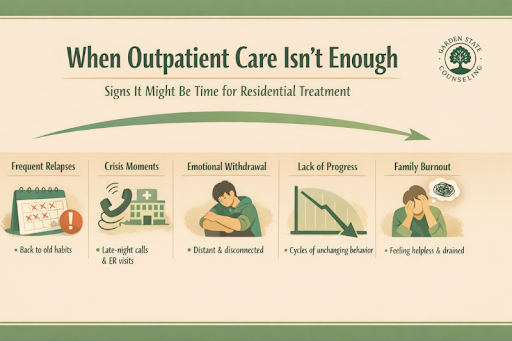
It might come after another relapse, another hospital visit, or another sleepless night waiting for a phone call.
Choosing deeper care isn’t a sign of failure. Often it’s the opposite—it’s the moment a family stops trying to manage a crisis alone.
What Changes When Someone Steps Into a Fully Supported Environment
Families often notice a different rhythm when their child enters a structured healing environment.
For the first time in months—or years—there’s space to breathe.
Instead of constant crisis management, the focus shifts to:
- Understanding the root causes of substance use
- Developing coping strategies
- Rebuilding emotional safety
- Creating a recovery plan that extends beyond treatment
Progress isn’t always linear. But the stability can give young adults something they’ve been missing: a real chance to reset.
A Story Many Families Share
One mother recently told me something that stayed with me.
Her son had tried outpatient care twice. Both times he started strong, then slipped back into the same environment, the same pressures, the same habits.
She said:
“I thought sending him somewhere more intensive meant I was giving up on him. But it turned out I was finally giving him space to heal.”
Six months later, their conversations sounded different.
Less fear. More honesty.
Hope started to return not overnight, but steadily.
Families Deserve Support Too
Parents often carry an invisible weight.
You worry constantly.
You replay every decision.
You ask yourself what you could have done differently.
But love alone cannot stabilize addiction. Recovery often requires a team.
For families exploring treatment options in New Jersey, having experienced clinicians guide the process can make the path forward feel less overwhelming.
You are not supposed to solve this alone.
Hope Often Begins With a Different Kind of Help
Many parents arrive at this decision feeling exhausted and unsure.
That’s understandable.
But the shift toward deeper care is often where meaningful healing begins for both the young adult and the family who loves them.
If your child is struggling again and you’re wondering whether more support could help, it may be time to learn about your options.
Call (201) 632-5716 or visit our programs, residential treatment program services to learn more about our programs, residential treatment program services in New Jersey.