



If you’ve heard about EMDR therapy but aren’t quite sure what it is—or whether it could help you—this blog is for you.
Maybe you’ve been through something hard. Maybe it was one moment that changed everything. Or maybe it was the kind of slow, ongoing pain that’s hard to explain to anyone else. And maybe you’ve reached a point where you’re tired of carrying it alone.
At Garden State Counseling Center, we offer EMDR therapy in Paramus, New Jersey to people who are struggling with trauma, anxiety, grief, and the weight of past experiences that just won’t stay in the past. EMDR is a therapy approach that helps your brain heal—without making you relive the pain.
Let’s walk through what it is, how it works, and why so many people find hope in this process.
EMDR: The Basics—What It Stands For and What It Does
EMDR stands for Eye Movement Desensitization and Reprocessing. It’s a therapeutic method developed specifically to help people process trauma that’s gotten “stuck.”
Unlike traditional talk therapy, EMDR doesn’t require you to explain every detail or “tell your story” over and over. Instead, it uses a unique process—often involving guided eye movements or rhythmic tapping—to help your brain move traumatic memories from a raw, reactive place to a calmer, more resolved one.
This isn’t magic. It’s brain science. But it can feel magical when the symptoms that have been haunting you begin to soften, and life starts to feel safer again.
Why Trauma Gets “Stuck” in the Brain
When something overwhelming happens—whether that’s a car accident, a breakup, bullying, abuse, or medical trauma—your brain and body go into survival mode. This is completely normal.
But sometimes, those memories don’t get fully processed. They linger. Your mind knows it’s over, but your body reacts like it’s still happening. You may notice:
- Emotional numbness or sudden panic
- Vivid flashbacks or nightmares
- Avoidance of certain people, places, or situations
- Irritability, shame, or unexplained sadness
- Feeling disconnected or out of control
EMDR works by re-engaging the brain’s natural processing ability—helping these memories settle, integrate, and release their emotional grip.
What Happens in an EMDR Session?
Every EMDR session is done with the guidance of a trained therapist, at your pace.
Here’s what the process usually looks like:
1. Preparation & Safety
You won’t jump into trauma work on day one. The first sessions focus on building trust, explaining the EMDR process, and helping you develop tools to feel grounded and safe during sessions.
2. Identifying Targets
Once you feel ready, you and your therapist identify a “target memory” or emotional pattern that feels unresolved. It might be a specific incident or a feeling that’s always followed you.
3. Bilateral Stimulation
The therapist will guide you through bilateral stimulation—such as following a light with your eyes, hearing alternating tones, or feeling tapping on your hands. This back-and-forth motion activates both sides of your brain, which helps you process the memory.
4. Noticing & Reprocessing
You’re not asked to re-live the memory. Instead, you’ll notice what comes up—thoughts, feelings, body sensations—and your brain begins to “file it away” in a healthier place. Over time, the memory becomes less charged. The emotion softens. And your relationship to the experience shifts.
5. Installation & Closure
Once the distress around the memory decreases, your therapist helps you “install” a positive belief to replace the old one. For example: instead of “I wasn’t safe,” you might feel, “I survived” or “I am okay now.”
You Don’t Have to Talk About Everything to Heal
This part often surprises people.
You don’t have to talk through every painful detail. EMDR doesn’t require you to explain or justify your trauma—it works with your brain’s natural healing ability, not your storytelling ability.
It’s especially helpful for people who:
- Shut down during talk therapy
- Have experienced things they can’t or don’t want to describe
- Struggle to access emotion directly
- Have tried other approaches that didn’t work
“I was afraid to even start therapy because I didn’t want to tell the story again. EMDR let me work through the pain without re-living it. It gave me space to heal on my terms.”
— EMDR Client, Bergen County
What Can EMDR Help With?
EMDR was originally developed to treat post-traumatic stress disorder (PTSD), but its applications have expanded. It can be used to treat:
- Single-incident trauma (accidents, assaults, natural disasters)
- Complex trauma (childhood abuse, neglect, emotional wounds)
- Anxiety, phobias, and panic attacks
- Grief and unresolved loss
- Medical trauma
- Attachment wounds and relationship trauma
- Performance anxiety, low self-worth, and shame
If you’ve been carrying something for too long and talking hasn’t helped, EMDR may offer a different way forward.
What It Feels Like When EMDR Starts to Work
Most clients don’t leave their first EMDR session feeling “cured.” But they often leave feeling something important: relief.
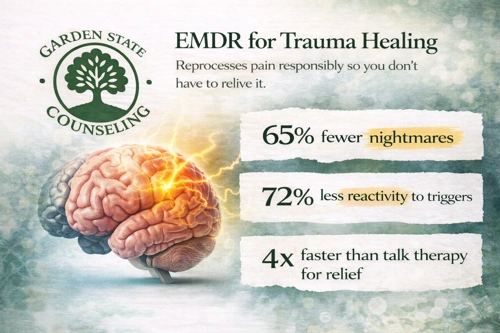
That tightness in your chest? It loosens. The nightmares? They show up less. The triggers? They lose some of their sting. You begin to feel more like yourself—not the anxious, disconnected version you’ve been trying to hold together.
Some clients describe it like this:
“I don’t forget what happened. But it doesn’t control me anymore.”
“It’s like I stopped bracing for impact all the time.”
“I finally feel like I’m in the driver’s seat.”
Looking for EMDR in Hackensack or White Plains?
If you’re not in Paramus but nearby, know that you’re still welcome here. We see clients from all over Bergen County and beyond. Many people come to us after searching for EMDR in Hackensack or EMDR in White Plains—and they stay because they feel safe here.
FAQ About EMDR Therapy
Is EMDR safe for everyone?
EMDR is considered very safe, especially when conducted by a licensed, EMDR-trained therapist. However, it’s not a quick fix. If you’ve experienced severe or ongoing trauma, your therapist will take extra care to ensure sessions feel manageable and not overwhelming.
Will I have to remember every detail of my trauma?
No. EMDR does not require full memory recall. Some people remember vivid images; others don’t. Healing still happens. What matters is how your body and brain respond—not how well you remember.
How long does EMDR therapy take?
This varies. Some people experience relief in a few sessions, especially if they’re working on a single memory. For complex trauma or long-standing issues, EMDR may take weeks or months. Your therapist will discuss the pace with you, and you’ll never be rushed.
What if I’m not ready to talk?
That’s okay. Many people start EMDR when they don’t feel “ready.” We meet you where you are. The goal isn’t to push you—it’s to support you gently and steadily.
Is EMDR covered by insurance?
Many insurance plans cover EMDR when it’s provided by a licensed clinician. At Garden State Counseling Center, we can verify your benefits and help you understand your options before you begin.
It’s Okay to Be Unsure. You Can Still Start.
You don’t have to be certain that EMDR is right for you. You don’t have to believe it’ll work. You just have to be willing to explore.
What if this is the thing that finally helps you breathe again?
What if the version of you that feels calm, clear, and whole is closer than you think?
Call (201) 632 5716 to learn more about EMDR therapy in Paramus, New Jersey. We’re here. When you’re ready.