



I didn’t walk in with hope. I walked in with a plan to leave.
Not on paper, not out loud—but in my head, I was already halfway gone. Another intake. Another list of symptoms. Another few weeks of trying to believe that maybe this time something might click, while knowing deep down it probably wouldn’t.
That’s what happens when you’ve been through treatment and come out the other side feeling exactly the same. You stop hoping. You start shielding.
But something different happened when I showed up at the Partial Hospitalization Program at Garden State Counseling Center in Paramus, New Jersey. And while I’m still not the kind of person to call anything a “breakthrough,” I will say this: it didn’t feel like another disappointment.
I came in guarded—and no one tried to knock that down
What I didn’t want: bright-eyed therapists telling me I just had to “trust the process.”
What I got: people who didn’t flinch when I said I didn’t think treatment worked for me.
That first day, they didn’t try to win me over. They just made space. Asked a few questions. Listened without pushing. And when I admitted that I didn’t expect much from this place, no one acted shocked or defensive.
There’s something powerful about being met with honesty. It gave me just enough room to stay.
This Partial Hospitalization Program felt different—because it didn’t pretend to be everything
Other programs had promised a lot.
Quick relief. Total clarity. A new me.
This one didn’t do that. It offered structure, support, consistency, and space to figure things out—not overnight, not all at once, but in ways that actually felt doable.
PHP gave me enough scaffolding to stop free-falling—but still let me keep my autonomy. I wasn’t being babysat or micromanaged. I was showing up each day to a space where I could feel messy and safe at the same time.
That balance? I didn’t know how much I needed it until I had it.
The staff knew how to read between the lines
Sometimes I’d show up and just shrug through most of the group. Other days I’d talk in circles because I didn’t really have the language yet to explain what was going on inside.
No one made me feel like I was failing therapy. They were patient. Attentive. They noticed when I went quiet in ways that didn’t feel intrusive, just… seen.
And when I finally started to talk more honestly—about how angry I was at past therapists, how tired I was of feeling like a “case” instead of a person—they didn’t tell me to reframe. They let it land. And then helped me build something new from there.
It wasn’t just more treatment. It was the right kind of treatment.
I’ve sat through a lot of sessions where it felt like we were just checking boxes.
This didn’t feel like that.
The Partial Hospitalization Program included:
- Group therapy that wasn’t just surface-level—it actually got to things I hadn’t voiced before.
- Individual therapy where I didn’t have to re-explain my life every week.
- Clinicians who cared more about what made sense for me than what worked for most people.
- Tools that weren’t just worksheets—but real skills I could try, mess up, and try again.
I didn’t walk away fixed. But I walked away with a little less resentment toward the idea that healing might be possible—even for me.
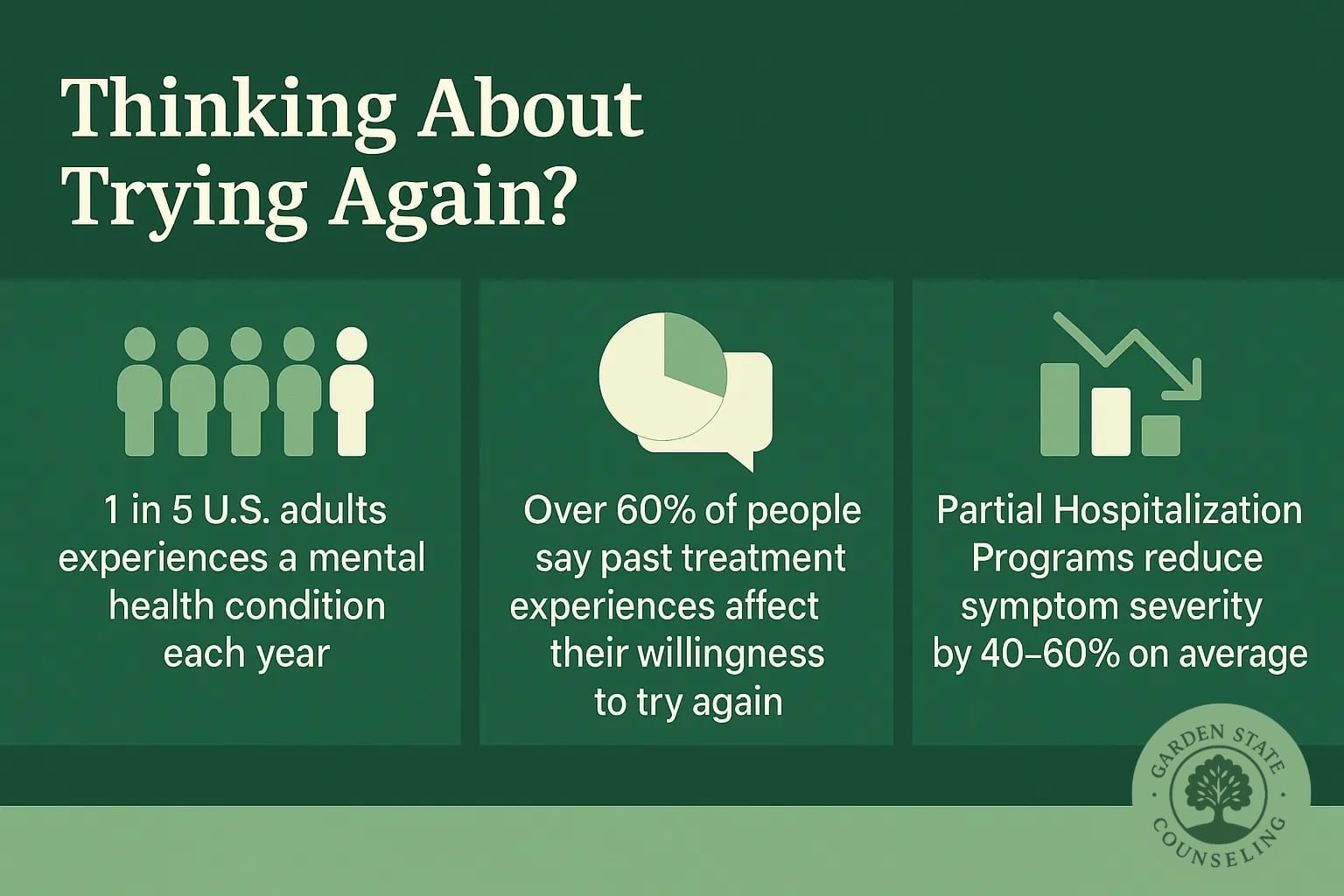
I expected burnout. I got a little bit of belief back.
That was the weirdest part, honestly.
I kept waiting to feel let down. For someone to dismiss something I said. For the schedule to feel rigid. For the staff to lose patience.
But those moments didn’t come. And when you’ve been burned before, that starts to feel more powerful than anything anyone could say.
Over time, I realized I wasn’t showing up just because I was supposed to. I was showing up because it felt like it mattered. Even on the days I didn’t want to talk, I wanted to be there.
I didn’t need another cure. I needed something that fit.
Some of us don’t need more “inspiration.” We need something that works without pretending to fix everything.
That’s what PHP at Garden State felt like. Not a cure. Not a brand. Just a place where I didn’t have to fight to be taken seriously. A space that welcomed me exactly where I was—and gave me room to move forward on my terms.
That made all the difference.
What I’d say to someone who’s already tried everything
If you’re reading this with a tired, skeptical heart—I see you.
If you’ve done therapy, tried meds, sat in rooms that didn’t feel built for you—I believe you.
You don’t need to convince anyone of how hard you’ve tried. And you don’t have to fake hope to give something new a chance.
If your story sounds anything like mine, maybe a Partial Hospitalization Program isn’t another false start. Maybe it’s the first time someone meets you where you actually are.
FAQs: Partial Hospitalization Program for Treatment Skeptics
Q: I’ve done therapy before. How is PHP different?
Partial Hospitalization Programs offer more structure than weekly therapy. Instead of one session a week, you attend several hours per day—so you’re not carrying your mental health alone between sessions. The pace allows for deeper work, with real-time support from both clinicians and peers.
Q: What if I don’t believe this will help me?
You’re not required to believe. You’re allowed to be unsure. PHP is designed for people who have tried other things and still feel stuck. The staff understands that trust might take time—and that’s okay.
Q: Is this inpatient or residential?
No. In PHP, you attend treatment during the day and go home at night. It gives you access to intensive support while still living your life outside the program.
Q: Do I have to share everything in group?
Nope. You can share what you’re comfortable with. Many people start by listening, and that’s okay. Group work in PHP is often where trust begins—not where it’s assumed.
Q: Will I be pushed to take medication?
Medication may be part of the conversation if you want it to be. But it’s not required, and no one will force a treatment plan on you. You’re part of every decision made.
Q: How long does PHP last?
It varies—some people attend for a few weeks, others longer depending on their needs. Your team will work with you to adjust the plan as things unfold.
No forced optimism. Just a real option.
I’m still cautious. Still slow to use the word “better.”
But I left PHP with something I didn’t expect: a little more trust in myself. A sense that maybe I wasn’t broken—just tired, overwhelmed, and overdue for care that fit.
If you’re someone who’s been through the wringer, I don’t have a sales pitch. I just have this: You deserve support that doesn’t ask you to pretend it’s working. You deserve something real.
Thinking About Trying Again?
You don’t have to fake hope to reach out. Just bring whatever’s true for you. Call (201) 632 5716 or visit our Partial Hospitalization Program in Hackensack, NJ to learn how Garden State Counseling Center supports people who’ve tried treatment before—and are still looking for something that works.