


The moment you say yes, it’s rarely relief. It’s something quieter—hope mixed with fear, and a thousand unanswered questions.
If you’re here, you’re not alone in that feeling.
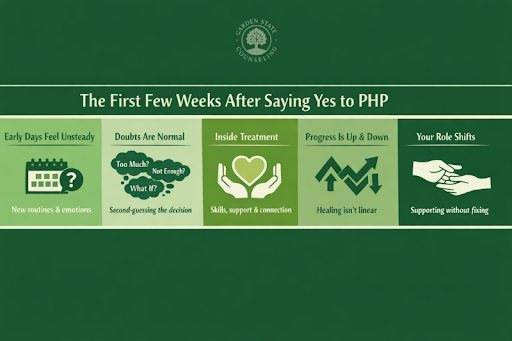
The First Few Days Can Feel Unsteady
After your child starts structured daytime care, the rhythm of your home may shift in ways that feel unfamiliar.
They’ll likely spend several hours a day in treatment. You may notice small changes—fatigue, emotional ups and downs, or even resistance. This doesn’t mean it isn’t working.
It means something real has started.
Many parents expect immediate improvement. But the truth is, the beginning often looks like discomfort before it looks like progress.
You Might Second-Guess the Decision
It’s common to wonder if you made the right call.
You may think:
- “What if this is too much?”
- “What if it’s not enough?”
- “What if they don’t engage?”
These thoughts don’t mean you’ve failed. They mean you care deeply.
In fact, choosing a higher level of support—especially when weekly therapy hasn’t been enough—is often a sign that you’re responding, not reacting.
What Your Child Is Actually Doing Each Day
Inside those hours, your child isn’t just “in therapy.”
They’re:
- Learning how to name what they feel
- Practicing coping skills in real time
- Sitting with others who understand more than they say
- Beginning to rebuild a sense of internal safety
It’s structured, but it’s also human.
If you want a clearer picture of how this level of care works, you can explore our structured daytime care approach early on—it helps take some of the mystery out of what their days look like.
Progress Doesn’t Always Look Like Progress
This is one of the hardest parts.
You might see:
- More honesty, but also more emotion
- Less withdrawal, but more visible struggle
- Small steps forward followed by hard days
Healing isn’t linear. It’s more like learning to walk again after an injury—awkward, slow, and sometimes painful.
But those early wobbles matter.
Your Role Shifts—And That Can Feel Strange
You’ve likely spent a long time trying to hold everything together.
Now, your role begins to change.
Instead of fixing, you’re:
- Supporting without controlling
- Listening without solving
- Allowing space for professionals to step in
That shift can feel like stepping back—but it’s actually creating room for your child to step forward.
And you don’t have to do it alone. Finding the right kind of help in New Jersey can support both of you through this transition.
Questions About “What Comes Next” Are Normal
Parents often ask:
- “How long will this take?”
- “What happens after this phase?”
- “Will they go back to how they were?”
There’s no perfect timeline.
But this level of care often serves as a bridge—something between weekly therapy and more intensive, round-the-clock support. It gives your child a place to stabilize, learn, and begin again without leaving their life entirely behind.
For many families, it opens the door to sustainable depression treatment options that actually meet the severity of what’s happening.
You’re Allowed to Feel Both Hopeful and Tired
You can feel relief that something is finally happening—and still feel exhausted.
You can believe in the process—and still feel scared.
Both are true.
There’s a quiet kind of strength in staying present through this part. Not perfect. Just present.
You Don’t Have to Carry This Alone
The first few weeks can feel uncertain, but they’re also where change begins—slowly, quietly, and often beneath the surface.
If you’re trying to make sense of what comes next, we’re here to help you understand your options and support your family through it.
Call 201-632-5716 or visit our php services in Paramus, New Jersey to learn more.