



Feeling Disconnected? You’re Not the Only One
In the early days of a residential treatment program, many people feel like outsiders in their own story—present, but not yet belonging. This ache is common. And yes, it softens over time. If you’re newly sober and deeply lonely, let’s talk about what connection really looks like in early recovery—and how long it might take to feel it.
(And if you’re considering a program like this residential treatment program, you’re already reaching toward something better.)
Why Do I Feel So Disconnected Right Now?
Because your life just changed and your body, mind, and heart are still catching up.
Early recovery often brings a kind of emotional jet lag. You’re physically here, but emotionally disoriented. Familiar coping tools are gone. New people, new structure, new everything. That sense of “these aren’t my people” is not a failure—it’s a phase.
Is It Normal to Feel Like I Don’t Belong?
Yes. Entirely.
Even people surrounded by support often feel like they’re watching life from the outside at first. You might think, “Everyone else is bonding. Why not me?” But the truth is, most people are wondering the same thing.
“I was friendly. I showed up. But I still felt like the quiet one in the corner for a while.”
— Residential Client, 2023
How Long Before I Start to Feel Connected?
It varies but usually, not instantly.
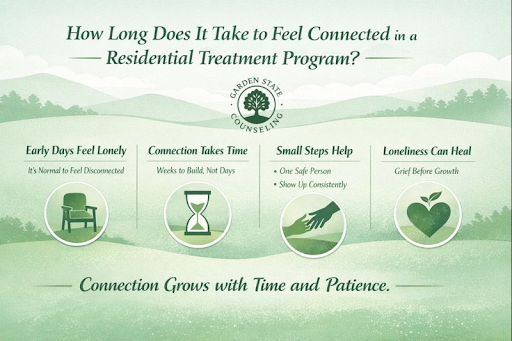
For some, the first real spark of connection shows up after a week or two. For others, it can take a month or more. Group therapy, shared meals, and even awkward small talk all build the bridge—slowly.
There’s no fixed timeline, but here’s what often helps:
- Consistency: Keep showing up to groups, meals, and shared spaces—even if it feels weird at first.
- One person at a time: You don’t have to bond with everyone. One safe person is a big win.
- Let it be awkward: Social discomfort isn’t a sign of failure—it’s part of the healing curve.
What If I Still Feel Lonely After a Few Weeks?
You’re not broken. And you’re not alone.
Loneliness in treatment is often grief in disguise grief for old routines, lost relationships, or even the version of yourself you had to leave behind. Feeling it means you’re letting go of isolation. That hurts before it heals.
Your care team can help. At Garden State Counseling Center, clinicians understand how loneliness shows up and how to support you through it. Whether it’s a quiet check-in or exploring what’s underneath the ache, help is here.
Can Connection in Treatment Be Real?
Yes and it often becomes one of the most meaningful parts of recovery.
Real connection isn’t loud or instant. Sometimes it’s someone remembering your name. Sitting next to you at lunch. Noticing when you look tired. These micro-moments of care accumulate. Over time, they become something solid.
If you stay, stay open, and stay gentle with yourself, you’ll get there.
Finding Care That Helps You Grow Again
If you’re seeking a residential treatment program where connection is nurtured, not forced, Garden State Counseling Center offers care in Helps You Grow Again. Every part of the program is designed to support your healing, at your pace.
And if you’re near the Garden State, you can also explore help in New Jersey for yourself or someone you care about.
📞 Ready to Talk?
Call (201) 632 5716 or visit our Residential Treatment Program page to learn more about our services.