



It can be confusing to realize that what you’ve been doing isn’t enough anymore. Not because you’ve failed—but because your needs have changed. And figuring out what comes next can feel overwhelming.
If you’re here, you’re probably trying to understand your options. Let’s walk through it together.
Starting Here: You’re Not “Too Much”—You Just Might Need More Support
There’s a quiet moment a lot of people experience.
You’ve tried to push through. Maybe you’ve done therapy. Maybe you’ve waited, hoping things would ease up. But something still feels heavy… or constant.
That doesn’t mean you’re broken. It might mean you need a different level of care—something more structured, more supportive, more consistent.
If you’re already exploring options like a residential treatment program, you’re not alone in asking these questions.
What “Levels of Care” Actually Means (In Plain Language)
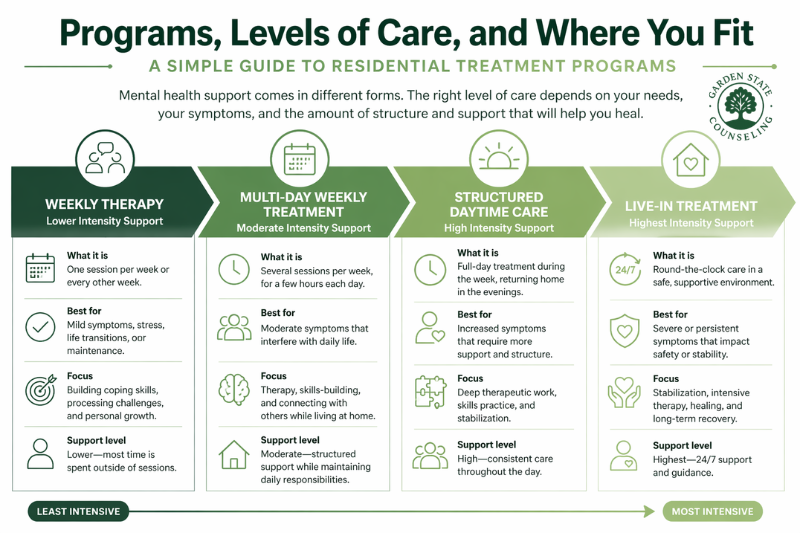
Mental health treatment isn’t one-size-fits-all. Think of it like layers of support—each one designed for a different level of need.
Here’s a simple way to picture it:
- Weekly therapy: A few hours a month, helpful for maintenance or mild symptoms
- Multi-day weekly treatment: Several sessions per week, more support without staying overnight
- Structured daytime care: Full days of treatment, but you return home at night
- Live-in treatment: Round-the-clock care in a safe, supportive environment
Each step up adds more structure, more guidance, and more time to focus on healing.
Signs You Might Need Something More Structured
You don’t have to wait for things to fall apart to consider a higher level of care.
Sometimes the signs are quieter:
- You feel stuck, even though you’re trying
- Your mood affects your ability to function day-to-day
- Getting through basic tasks feels exhausting
- You’ve tried therapy, but nothing seems to shift
- You’re withdrawing from people or losing interest in things you used to enjoy
If any of that feels familiar, exploring options like residential treatment depression NJ programs could be a meaningful next step—not a last resort.
What Live-In Treatment Actually Feels Like
A lot of people worry about this part.
They imagine something cold, clinical, or restrictive.
But in reality, live-in care is often the opposite.
It’s structured, yes—but also supportive. Predictable. Grounding.
You have:
- A daily routine that removes decision fatigue
- Access to therapists and support when you need it
- Space away from stressors that may be keeping you stuck
- Time to focus fully on yourself without distractions
For many people, it’s the first time things start to feel manageable again.
How Long Does It Last?
This is one of the most common questions—and the answer is: it depends.
Some people stay for a few weeks. Others benefit from a longer period of care.
What matters most isn’t the exact timeline—it’s having enough time to stabilize, understand what’s going on, and begin building real momentum forward.
Healing isn’t something you rush. It’s something you give space to.
You Don’t Have to Figure This Out Alone
Trying to decide what level of care you need can feel like a lot.
Especially when your mind is already overwhelmed.
That’s why talking it through with someone who understands can make a difference. Whether you’re exploring care in New Jersey or just starting to ask questions, there’s support available to help you sort through your options.
A Simple Next Step
You don’t need to have everything figured out today.
You just need one step.
Call 201-632-5716 or visit the residential treatment program services in Paramus, New Jersey to learn more about our programs, residential treatment program services in Paramus, New Jersey.
Even asking the question is a form of movement. And sometimes, that’s where things begin.