

It’s a quiet kind of panic. The kind that sits in your chest when you start noticing the signs again—the late nights, the distance, the things that don’t quite add up.
If your child has started using again, you’re not alone in this moment. And more importantly, you haven’t failed.
The Moment You Realize Something Isn’t Right
Most parents don’t get a clear announcement.
It’s subtle at first. A shift in tone. Missed calls. A gut feeling you can’t shake.
And then something clicks.
You might find yourself replaying everything—Did I miss something? Should I have done more? That spiral is common. But it’s also not where the real help begins.
If you’re realizing your adult child needs addiction help, what matters now is recognizing that relapse or continued use is often part of a longer process—not the end of the story.
What matters now is recognizing that relapse or continued use is often part of a longer process—not the end of the story.
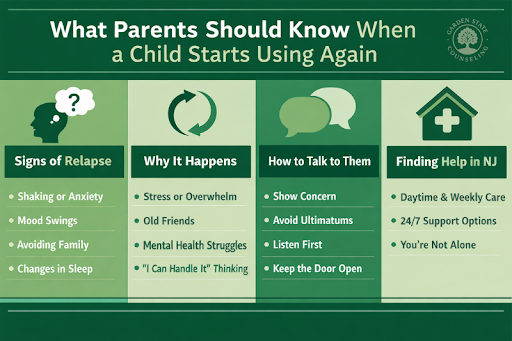
Why Going Back to Old Patterns Happens
Even after treatment, young adults are still figuring out how to manage stress, identity, and independence.
Substance use can resurface when:
- They feel overwhelmed or lost
- Old environments or friendships return
- Mental health struggles haven’t fully been addressed
- They believe they can “handle it this time”
This isn’t about stubbornness or failure. It’s about coping—just not in a way that keeps them safe.
What You Might Be Seeing (And Why It Matters)
Sometimes the signs are physical. Other times, they’re emotional or behavioral.
If alcohol is involved, you may notice things like shaking hands, anxiety, trouble sleeping, or irritability. These can be early indicators of alcohol withdrawal symptoms, which can become serious without proper support.
Other signs might include:
- Sudden mood swings
- Avoiding family or responsibilities
- Financial issues or secrecy
- Changes in sleep or appetite
These aren’t just “phases.” They’re signals your child may need help again—possibly sooner than later.
You Don’t Have to Wait for It to Get Worse
A common belief is that things need to hit a breaking point before action is taken.
That’s simply not true.
Early support can prevent deeper harm. It can also open a door before your child feels completely stuck.
If you’re unsure where to turn, you can start by exploring an addiction hotline in NJ that offers immediate, confidential guidance. You don’t need all the answers before reaching out.
How to Approach Your Child Without Pushing Them Away
This is one of the hardest parts.
You want to help—but you’re also afraid of saying the wrong thing.
A few things that can make a difference:
- Speak from concern, not control
- Avoid ultimatums in emotional moments
- Focus on what you’re noticing, not accusing
- Leave space for them to respond—even if it’s not what you hope
Sometimes the goal isn’t to fix everything in one conversation. It’s to keep the door open.
Finding the Right Kind of Support in New Jersey
Not every situation requires the same level of care.
Some young adults benefit from structured daytime care. Others may need more consistent weekly support or even a reset with round-the-clock help.
The key is matching the support to where they are right now—not where you wish they were.
If you’re looking for guidance, there are options for care in New Jersey that focus on both substance use and the emotional layers underneath it. You don’t have to figure this out on your own.
Holding Onto Hope (Even If It Feels Fragile)
There’s a specific kind of heartbreak that comes with watching your child struggle again.
It can feel like starting over.
But it’s not.
Everything they’ve learned, every moment of clarity—they’re still in there. Recovery isn’t erased by setbacks. It’s shaped by them.
And your presence—your willingness to stay, to care, to keep looking for help—that matters more than you may realize.
You Can Take the Next Step—Gently
If you’re sitting with questions, fear, or uncertainty, that’s enough reason to reach out.
Call (201) 632 5716 or visit addiction resources nj services in Paramus, New Jersey to learn more about our addiction resources nj services in Paramus, New Jersey.
You don’t have to solve everything today.
Just take the next step.