

When I stopped showing up to my outpatient program, I figured that was it.
I ghosted. I felt too ashamed to explain, too tired to try again. But eventually, something in me wanted a real reset—and that’s when I found a residential treatment program that didn’t make me feel like a failure, just someone worth rooting for.
If you’re wondering whether you’re “allowed back,” or what comes next after a dropout, I hope this helps. You’re not broken. You’re not the only one. And it’s not too late.
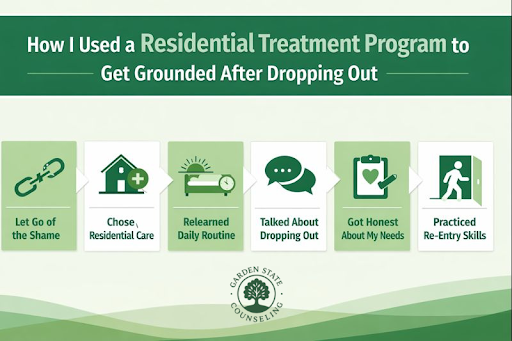
1. I Let Go of the Shame Around Quitting
I used to replay the “dropout” in my head like a failure reel. But here’s the truth: walking away doesn’t mean you gave up, it might just mean you weren’t ready in that moment. I wasn’t. Life was loud, and I was drowning in it. What helped was realizing that healing isn’t a straight line. Sometimes you step out to catch your breath. That’s allowed.
2. I Chose a Residential Treatment Program Built for Re-Entry
Outpatient felt like too much freedom too soon. I needed structure, not punishment. A residential treatment program offered that: 24/7 support, space from triggers, and a team that didn’t flinch when I said, “I bailed last time.” They understood. And that made all the difference. (Here’s where I found mine: residential treatment program).
3. I Relearned How to Do Mornings (and Evenings, and Everything In Between)
I know this sounds small, but having a set time to wake up, eat, reflect, and sleep gave me a sense of rhythm I didn’t realize I’d lost. Residential gave my nervous system a break from chaos. I didn’t have to make a million decisions. I could just focus on breathing, healing, and doing the next right thing.
4. I Talked About Why I Left—and No One Shamed Me
The first time I opened up about ghosting treatment, I expected eye rolls. What I got instead was a quiet nod and someone saying, “Yeah, that makes sense.” I was stunned. At Garden State, they didn’t force me to unpack it all right away. They just kept the door open and let me walk back in on my own terms. If you’re looking for care in New Jersey, there are people who’ll meet you with that same warmth.
5. I Got Honest About What I Actually Needed
Outpatient was too much pressure for me back then. I needed someone to say, “You don’t have to do this alone.” In residential, I had access to therapists, group work, movement therapy, and quiet time. It wasn’t a miracle cure but it was a place to get real about my needs and start rebuilding without judgment.
6. I Practiced Re-Entry, Not Just Recovery
One thing that surprised me? Residential didn’t just help me feel better—it helped me prepare to leave well. We practiced what life would look like after treatment. We talked about realistic routines, support systems, and how to stay grounded in the mess of the real world. That part mattered just as much as the therapy.
You’re not a failure if you left. You’re not broken if it didn’t stick the first time. You’re allowed to come back. And if you need structure, support, and someone who won’t judge you for ghosting before, a residential treatment program might be the grounded place you need next.
Learn more about our residential treatment program services at Garden State Counseling Center.
📞 Call (201) 632 5716 or visit this page to learn more about our Residential treatment program services in New Jersey.