


Starting medication can feel like crossing an invisible line—one you may not have wanted to reach. If you’re here, it likely means you’ve been struggling for a while. Maybe therapy helped, but not enough. Maybe sleep’s been broken, or emotions feel distant or overwhelming. And now someone—maybe your doctor, maybe a loved one—is bringing up medication.
Let’s dive into real, non-scary answers about one option: mirtazapine. We’ll explain what it is, what it helps with, and how it might fit into your broader mental health treatment. No pressure. Just information, peer-to-peer.
What is Mirtazapine?
Mirtazapine is a type of antidepressant that affects brain chemicals like serotonin and norepinephrine—two key players in mood, sleep, and emotional regulation. It’s often sold under the brand name Remeron.
Unlike many antidepressants that belong to the SSRI family (like Prozac or Zoloft), mirtazapine works a little differently. It’s classified as a NaSSA (noradrenergic and specific serotonergic antidepressant), which means it targets mood without the same stimulation some other medications can cause.
What Does Mirtazapine Help With?
Mirtazapine is primarily used to treat:
- Major depressive disorder (MDD)
- Anxiety disorders
- Sleep disturbances linked to depression or anxiety
- Appetite loss or severe weight loss in some cases
Some people are prescribed mirtazapine specifically because of its sedative effects. If your depression comes with insomnia, agitation, or emotional flatness, this medication may help address more than one symptom at a time.
How Does Mirtazapine Feel?
This is a common question—and a good one.
People often fear that antidepressants will numb them out or change their personality. But the goal with mirtazapine isn’t to make you feel nothing. It’s to help you feel more like yourself again—less hijacked by sadness, anxiety, or exhaustion.
Some people notice:
- Improved sleep within the first week
- Reduced anxiety and restlessness
- Gradual lifting of depressive symptoms over 2–6 weeks
- Increased appetite (which can be helpful or frustrating, depending on your goals)
Your experience may be different. The key is slow, supported use with a provider you trust.
Is Mirtazapine Right for Everyone?
No medication is. But mirtazapine is often considered when:
- SSRIs caused too much anxiety, insomnia, or nausea
- You’re dealing with both depression and insomnia
- You’ve experienced poor appetite or weight loss
- You need a gentler medication to start with
It’s not usually the first option for everyone, but for the right profile—it can be a deeply helpful tool.
Can I Take This and Still Do Therapy?
Yes—and in fact, this combination is often more effective than medication or therapy alone.
Medication doesn’t replace therapy. It supports it. It can help quiet the noise enough for your brain to fully engage with healing work—whether that’s talk therapy, trauma treatment, or group support.
You can read more about these options in our mental health treatment services section.
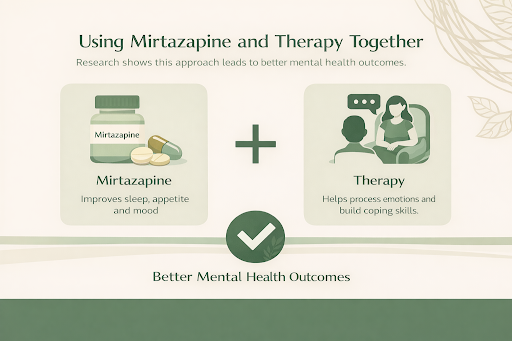
Using Medication and Therapy Together for Better Mental Health Outcomes
Mirtazapine doesn’t have to be an either/or decision. In fact, research shows that combining medication and therapy often leads to better results—especially for depression and anxiety.
Where medication can stabilize brain chemistry, therapy helps you explore patterns, build skills, and process the hard stuff. One supports the other. Neither replaces who you are.
At Garden State Counseling Center, our mental health treatment services are designed to support this kind of integrated care. Whether you’re stepping into therapy for the first time or returning after a hard stretch, we’ll work with you to find a rhythm that feels doable—not overwhelming.
How Do I Know If I’m Ready?
Being “ready” doesn’t mean being certain. It means you’re open to learning what support could look like.
If part of you wants relief—but another part is scared you’ll lose something about yourself—that’s okay. You’re allowed to feel cautious. What matters is finding care that respects your whole self, not just your symptoms.
If you’re not sure where to begin, you can always start with a provider who knows how to work with nuance. You don’t have to say yes to medication today. But understanding options like mirtazapine is a powerful step forward.
If you’re looking for support in New Jersey that meets you where you are—whether that’s with talk therapy, structured care, or exploring medication with guidance—you’re not alone. You can also learn more about our treatment options in Helps You Grow Again.